What is business process automation? Explained with real examples


On this page
Automation has an image problem: people picture factory robots or a complicated IT project. In an office it is much less dramatic.
It simply means that a sequence of steps you do the same way every time happens without anyone remembering to do it.
The definition, without the textbook
A process is a fixed sequence: something arrives, several things happen in order, something leaves. Order comes in, stock is checked, delivery note is created, goods go out, invoice follows, payment is monitored.
Automating it means the system carries the sequence forward by itself and only involves a person where a decision genuinely needs one.
More on this: How to automate a business process — a practical 7-step guide
Classic automation vs. AI automation
Classic automation handles structured data and rigid rules: if field A equals B, do C. It has existed for decades and it is still the right answer for a large share of the work.
What is new is that AI can handle the unstructured part — a supplier PDF in an unfamiliar layout, a customer email written badly at 22:00, a scanned delivery note. That was the barrier that stopped most office processes from being automatable at all.
| Type of work | Right approach |
|---|---|
| Fixed rules on clean data | Classic automation — cheap and reliable |
| Reading documents and emails | AI, with a human checking exceptions |
| Drafting text and offers | AI, with approval before it goes out |
| Weighing up an unusual case | Human, supported by the system |
More on this: Which tasks can AI actually take over in a company?
A real sequence, before and after
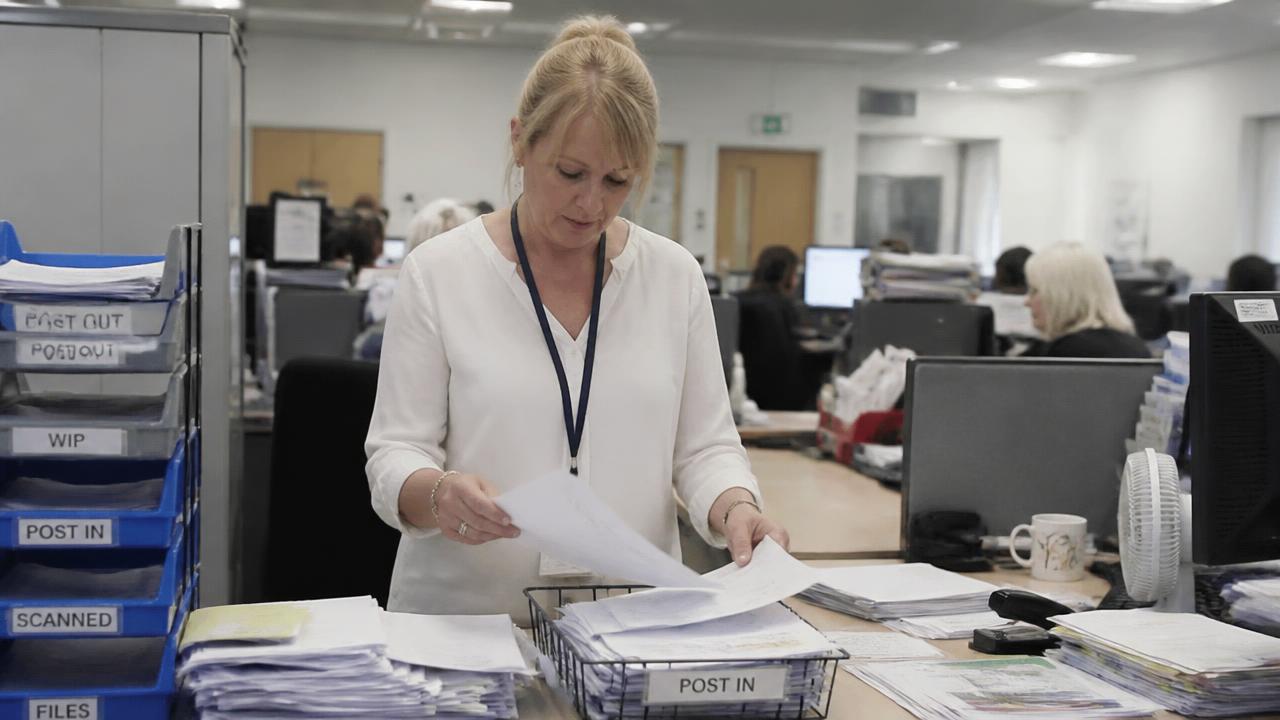
Before: an enquiry arrives by email. Someone reads it two hours later, looks up the customer, asks a colleague about pricing, writes the quote in Word, saves it somewhere, emails it, notes a reminder, and forgets to follow up eight days later.
After: the enquiry is read within a minute, matched to the customer record, priced against current material costs and your margin rules, drafted as a complete document, and placed in an approval queue. One person checks it, presses send. The follow-up happens on day four whether or not anyone remembers.
Nothing in that example is futuristic. It is one process, written down properly, then encoded.
Where to start
Pick the process that satisfies three conditions at once: it happens often, it follows the same shape each time, and the team complains about it. That combination is where automation pays back fastest and where the organisation actually welcomes it.
Avoid starting with the most complex process in the company just because it is the most expensive. Complexity multiplies the cost of every mistake in the first project.
What usually goes wrong
Three failure modes, in order of frequency: automating a process nobody has agreed on, automating a broken process instead of fixing it, and automating without measuring anything so nobody can tell whether it worked.
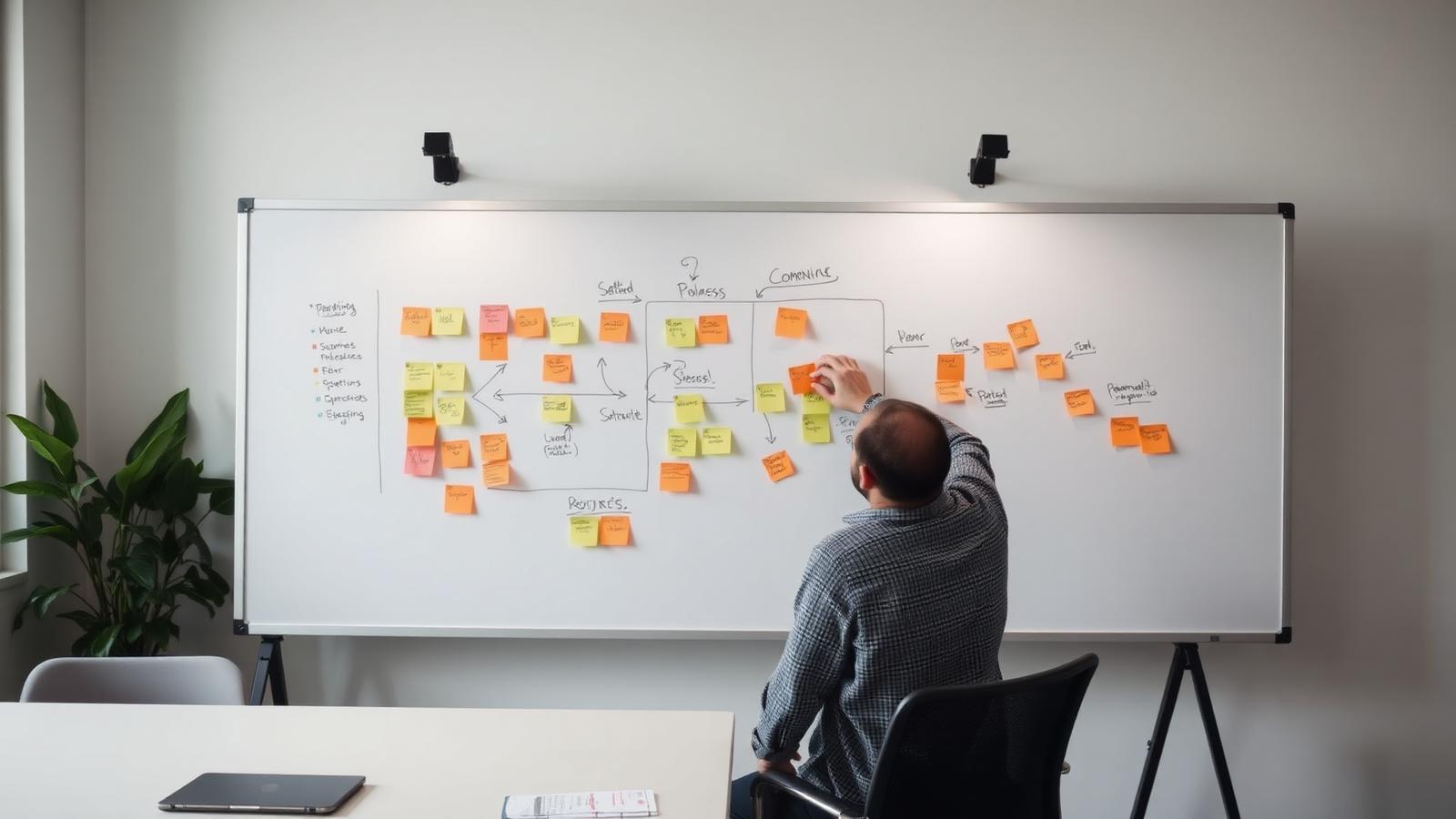
All three are avoided by the same unglamorous step — mapping the process with the people who do the work before writing any code.
In short
- Automation applies to sequences, not to individual clicks.
- The prerequisite is a process that is written down and stable.
- Start where the work is frequent, repetitive and annoying.
- AI extends automation to work involving text, documents and judgement calls.
How could AI employees be used in your firm or your business?
Name the process that eats the most time each week. You get a short, honest answer on what can be automated, how many hours that frees and what a first step costs.
After 30 minutes you have
A clear yes or no
Whether your task is suited to an AI employee at all.
A real number
What it roughly costs — and what you realistically save.
The first step
Concrete and doable. Even if it happens without us.
AI expert for mid-sized companies
„I can help you move the repetitive work in your company over to AI employees.”
Tell us the task that eats the most time
You do not need to know the technology behind it. Just write, in your own words, what costs you the most time.
What happens next
- 1
We review your task
We check whether an AI employee is worth it for this at all.
- 2
We write back to you
Usually within one business day — short and without obligation.
- 3
30 minutes of clarity
What works, what does not, and what your first step would be.
What happens if you do not switch to AI
Your competitors are switching already.
The majority of companies plan to introduce AI in 2026.
That means up to 30% more margin.
Because AI employees take over the recurring tasks.
Costs drop significantly.
AI works around the clock, needs no holidays and no payroll overhead.
More money is left for marketing.
Saved costs flow into advertising — and bring in more customers.
Customers move to the competition.
More ad budget pulls customers away — and leaves less market for you.
Whoever does not adapt is pushed out of the market.
Over the next two to three years AI becomes the standard for mid-sized companies — not an option.
This is not scaremongering — it is already happening in the first industries. And most companies do not fail because they lack the will, but because they do not know how to walk this path. That is exactly what we show you — and implement for you if you want. We create clarity and we deliver.
Do not put your decision off until tomorrow
One conversation, 30 minutes, free. Afterwards you know which task in your company suits an AI employee — and what the first step is.
No obligation. No lock-in contracts, no sales pressure. Prefer to write? Go to the form